Everything in Your Closet Is Trying to Tell You Something

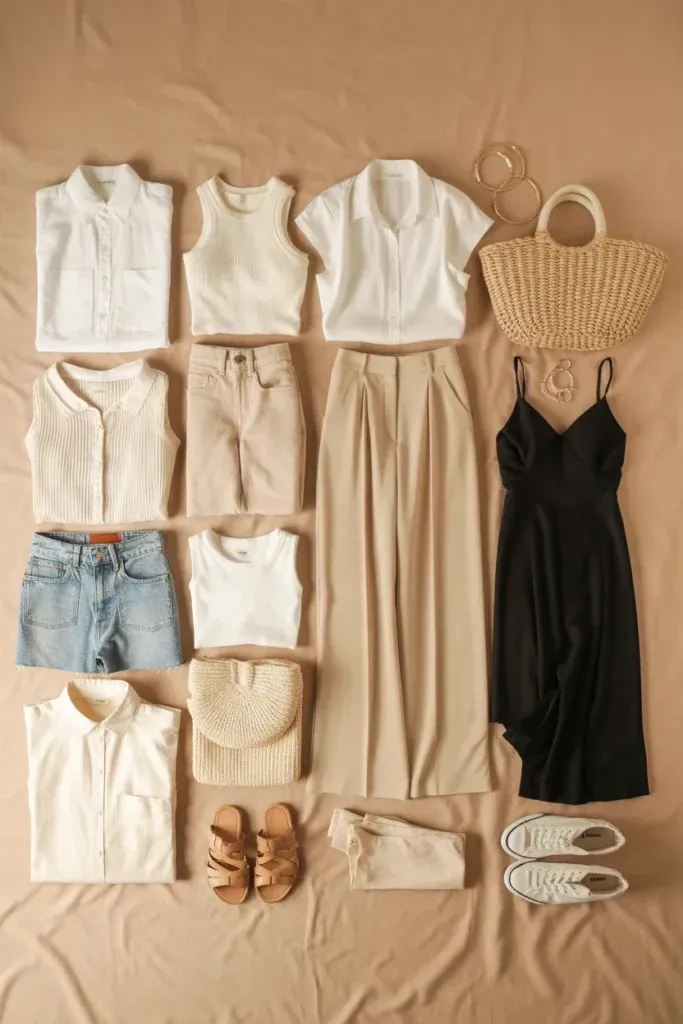
Photo: woman organizing minimal wardrobe open closet neutral tones, via i.pinimg.com
Here's the thing about your closet: it's basically a diary you never meant to keep. Every impulse buy, every aspirational purchase, every "I'll wear this eventually" piece—it's all in there, folded or hanging or shoved into the back corner where you don't have to look at it.
Doing a real wardrobe audit isn't the same as decluttering. It's not about reaching some magic number of pieces or achieving an Instagram-worthy closet layout. It's slower than that, and honestly more uncomfortable. It's about reading what your wardrobe is actually saying about how you live, what you value, and where your money has been going.
You don't need to be a minimalist to benefit from this. You just need about two hours and a willingness to be a little bit honest with yourself.
Start by Getting Everything Out
This part sounds obvious, but most people skip it. Don't audit your closet inside your closet. Pull everything out—every drawer, every shelf, every forgotten bin under the bed—and put it somewhere you can see it all at once. A bed works. A clean floor works. The goal is to see the full picture before you start making any decisions.
When everything is in front of you, your first job isn't to judge any of it. It's just to notice. Notice what there's a lot of. Notice what surprises you. Notice what you forgot you owned.
That moment of "wait, I have three of these?" is exactly the kind of data you're looking for.
Sort Before You Edit
Before anything goes into a donate pile, sort everything into loose categories—not by type, but by how you actually use them:
- Worn regularly. These are your workhorses. You reach for them without thinking.
- Worn occasionally but intentionally. Think: the dress you wear to every wedding, the blazer that comes out for presentations. These have a purpose, even if it's narrow.
- Worn almost never, but you keep them anyway. This is where the audit gets interesting.
- Never worn. Tags still on, or so forgotten you had to think hard about the last time they left the hanger.
Don't make any decisions yet. Just sort.
Ask the Real Questions
Once you can see your categories clearly, this is where the reflection prompts come in. Grab a notebook or open your notes app. Be honest—no one's grading this.
For the "never worn" pile:
- Why did you buy this? Was it on sale? Did someone else love it on you? Were you buying for a version of your life that doesn't really exist?
- Is there a specific barrier stopping you from wearing it—fit, occasion, how it makes you feel?
- If you found this at a thrift store today, would you pick it up?
For the "worn occasionally" pile:
- Does this piece solve a real gap, or does it overlap with something you already have?
- Is the occasion it serves actually part of your life, or part of the life you think you should have?
For the "worn regularly" pile:
- What do these pieces have in common? Color, fabric, silhouette, how they feel on?
- If you could only keep ten things from this pile, which ten would they be—and what does that tell you?
These questions aren't designed to make you feel guilty. They're designed to help you understand your own patterns. Guilt doesn't change behavior. Understanding does.
Map Your Actual Lifestyle
One of the most useful things you can do during a wardrobe audit is draw a rough map of how you actually spend your time—not how you wish you spent it.
For one week, track roughly what you're doing and what you're wearing. Are you mostly at a desk? Running errands? Going to the gym? Grabbing dinner with friends on weekends? The breakdown might surprise you.
If 80% of your life is casual and comfortable but 60% of your closet is workwear or going-out clothes, that mismatch is costing you money and mental energy every single morning. The goal of a wardrobe that works isn't to have fewer things—it's to have things that actually fit your real life.
Identify the Gaps (The Honest Ones)
After you've sorted, reflected, and mapped, you can start to see the actual gaps. Not gaps manufactured by a trend cycle or a brand email, but genuine missing pieces that would make your daily getting-dressed experience easier.
Maybe you have plenty of tops but no pants that work with all of them. Maybe you have great going-out options but nothing comfortable enough for a long travel day. Write these down specifically.
This is your actual shopping list—and it's probably shorter than you expected, and way more specific than "I need more basics."
What "Enough" Actually Means
Here's the honest part: enough looks different for everyone. A person who performs in theater has different wardrobe needs than someone who works remotely and hikes on weekends. A person who genuinely loves clothes and finds joy in getting dressed has different needs than someone who just wants to stop thinking about it.
The point of this audit isn't to arrive at a number or a standard. It's to arrive at your standard—one that's grounded in your actual life, not a Pinterest board or someone else's capsule wardrobe reveal.
When you know what you have, what you actually use, and what's genuinely missing, you stop buying reactively. You stop buying to fill an emotional gap or because something was on sale. You start buying with intention, and the things you bring into your closet start earning their place.
That's the whole game. Not perfection. Just less noise, and more of what actually works.
One Last Thing Before You Go Shopping
Sit with your audit for at least a week before you buy anything. Let the list of genuine gaps settle. You might find that one or two of the "gaps" you identified don't actually need filling—you just got used to thinking you needed more.
The best wardrobe isn't the most curated one. It's the one you actually wear, that reflects who you actually are, that stops making you feel guilty every time you open the door.
Your closet has been talking. Now you know how to listen.