Do the Math: Cost Per Wear Is the Only Fashion Metric That Actually Matters

Photo: Federal Bureau of Investigation, Public domain, via Wikimedia Commons
Let's start with the formula, because it's embarrassingly simple: take what you paid for a piece of clothing, divide it by the number of times you've worn it. That's your cost per wear (CPW). A $200 pair of jeans worn 100 times costs you $2 per wear. A $60 blouse worn three times costs you $20 per wear. The math doesn't lie, and once you start running it, you can't stop.
Cost per wear isn't a new concept — financial writers and minimalist fashion bloggers have been championing it for years. But it remains stubbornly underused, largely because it forces us to confront the gap between what we think we're buying and what we're actually getting out of our wardrobe. That gap, for most American consumers, is significant.
Why We're Bad at Predicting What We'll Actually Wear
Here's the uncomfortable truth: we are consistently, almost comically bad at predicting how often we'll wear something at the point of purchase. We shop in a kind of aspirational haze. We buy the silk midi skirt imagining the dinner parties, the weekend trips, the effortless Tuesday evenings. We do not buy it imagining it sitting in a dry-clean-only purgatory for eight months because we keep forgetting to take it to the cleaner.
Research on consumer behavior consistently shows that we overestimate future use of purchases across categories — but fashion is a particularly acute case because so much of what drives us to buy is emotional rather than rational. The dopamine hit of something new, the fantasy of who we'll be wearing it, the social reward of compliments. None of that has anything to do with CPW.
The result? Most Americans wear only about 20 percent of their wardrobe 80 percent of the time. The rest hangs there, silently inflating the real cost of everything you actually do wear.
Running the Numbers on Your Own Closet
Try this. Pick five items from your closet right now — ideally a mix of things you reach for constantly and things you've been meaning to wear "eventually." Look up what you paid (check your email receipts if you need to), estimate honestly how many times you've worn each one, and divide.
Here's what you might find:
The Workhorse Basics: That plain white tee from a mid-range brand you bought for $28 two summers ago and have worn approximately 60 times? Your CPW is $0.47. It's the most cost-efficient item you own, and you probably don't think about it much.
The Investment Piece You Actually Invested In: The $180 leather belt you bought after deliberating for three weeks, worn with jeans, trousers, and over coats for three years? If you've worn it 150 times, your CPW is $1.20. Solid. The deliberation paid off.
The Trend Buy: The $75 statement sleeve blouse from two seasons ago, worn to one event and never again because the trend passed before you found another occasion for it. CPW: $75. More expensive per wear than a cashmere coat.
The "Investment" Piece That Isn't: The $320 structured blazer you bought because it felt like a responsible adult purchase but which doesn't actually fit your lifestyle, worn four times. CPW: $80. Ouch.
The Thrift Score: The $22 vintage denim jacket you found at a swap meet, worn constantly for two years — easily 80 wears. CPW: $0.28. The winner, by a mile.
The Myths CPW Exposes
Running this exercise regularly dismantles a few persistent myths about how to shop well.
Myth #1: Expensive always means better value. Price and CPW are not correlated in any consistent way. What matters is the intersection of quality and wearability. A beautifully made piece you never reach for is still a bad investment. A moderately priced piece you love and wear constantly is one of the smartest purchases you'll make.
Myth #2: Sustainable fashion is always the most sustainable choice. A $250 ethically-made linen shirt is only sustainable if you actually wear it. If it sits unworn because the fit is slightly off or the color doesn't work with your existing wardrobe, its ethical production doesn't offset its practical uselessness. The most sustainable garment is the one you wear — repeatedly, enthusiastically, for years.
Myth #3: Trend pieces are always wasteful. Not necessarily. If a trend item genuinely integrates into your regular rotation and you wear it consistently, it can have a perfectly respectable CPW. The problem isn't trends per se — it's buying trend pieces speculatively, hoping you'll find a way to wear them.
How to Use CPW Before You Buy
The real power of cost per wear isn't in auditing your past purchases (though that's clarifying). It's in applying the framework prospectively — before you swipe your card.
Ask yourself: how many times, realistically, will I wear this in the next year? Be honest. Think about your actual life, not your aspirational one. If you work from home four days a week, that structured office blazer is going to see less action than you imagine. If you live in a hot climate, that heavy wool coat is probably a once-a-season wear at best.
Then think about cost per wear as a target. Many minimalist fashion thinkers suggest aiming for under $5 CPW as a reasonable benchmark for most pieces — though for high-quality outerwear or shoes, a higher number can still represent good value given the longevity.
The goal isn't to only buy cheap things. It's to only buy things that will earn their place in your wardrobe through actual use.
The Folded & Co. Perspective
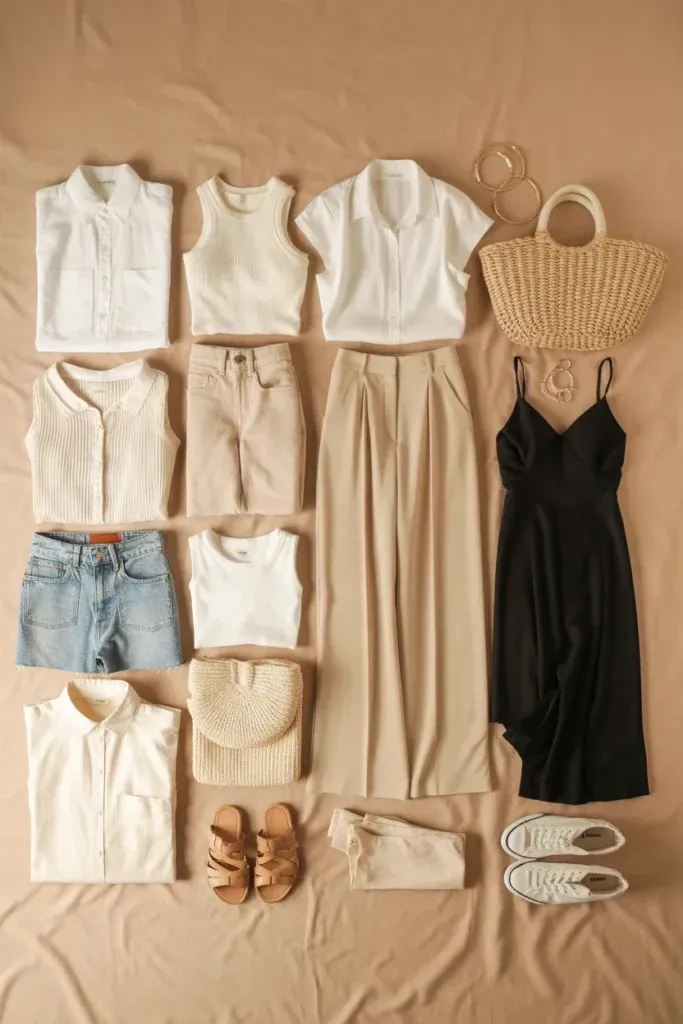
Wear less, mean more. That's not just a brand line — it's a practical instruction. A smaller wardrobe of pieces with low cost per wear is, almost by definition, a more sustainable wardrobe. Fewer purchases, more use per garment, less waste. The math supports the philosophy.
When you start thinking in CPW, you naturally start buying less and choosing better. You get more discerning about what earns a place in your closet. You stop buying things that don't fit your actual life. And you start appreciating the pieces that work — the worn-in, the reliable, the genuinely useful — in a way that no amount of aspirational shopping ever delivers.
The most sophisticated thing you can do with your wardrobe isn't to spend more. It's to waste less. And the numbers will show you exactly how to get there.