Thread by Thread: The Quiet Thrill of Fixing What You Already Own
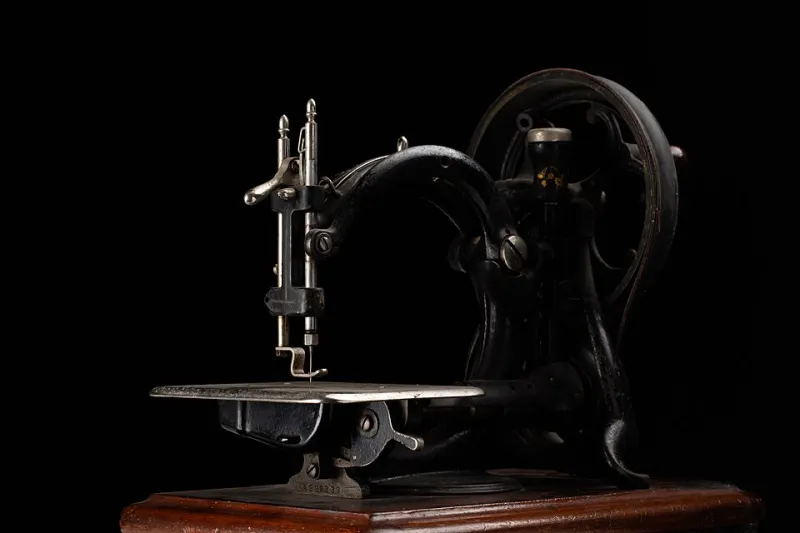
Photo: Auckland Museum Collections from Auckland, Aotearoa New Zealand, CC BY 2.0, via Wikimedia Commons
Let's be honest: the moment a button pops off or a hem drops, most of us have been conditioned to treat it as a verdict. The item is done. Time to replace it.
That reflex isn't accidental. It's the product of decades of fast fashion economics that made clothes so cheap and repair so seemingly complicated that throwing something away became the default rational choice. Why spend an hour learning to darn a sock when a six-pack of new ones costs eight dollars?
But something is shifting. Quietly, in living rooms and community centers and YouTube comment sections across the country, people are picking up needles again — and discovering that fixing things feels genuinely, unexpectedly good.
Why Repair Feels Like Rebellion
There's a reason the Japanese concept of kintsugi — repairing broken pottery with gold — keeps showing up in think pieces and Instagram captions. The idea that damage, repaired with care, can become part of an object's beauty is philosophically radical in a culture that treats imperfection as a reason to discard.
Garment repair carries the same energy. When you mend a jacket instead of replacing it, you're making a quiet but real statement: this thing has value beyond its newness. You're opting out of the cycle that profits from your conviction that worn equals worthless.
"There's a political dimension to mending that I think people underestimate," says Dani Torres, a textile artist and mending workshop instructor based in Brooklyn. "Every piece you repair is one piece that doesn't end up in a landfill, and one piece you don't have to buy. That math adds up fast."
It does. The EPA estimates that Americans throw away about 11.3 million tons of textile waste per year. A significant portion of that is clothing discarded for minor damage — a broken zipper, a worn-through elbow, a split inseam — repairs that take less than thirty minutes with basic skills.
Start Here: The Four Repairs Worth Learning First
You don't need to become a tailor. You need to become competent at a small handful of fixes that cover the majority of real-world wardrobe disasters. Here's where to start.
1. The Running Stitch (For Split Seams)
This is the most foundational repair in the toolkit, and it handles the most common problem: a seam that's come apart. You'll need a hand-sewing needle, thread that matches your fabric, and scissors.
Turn the garment inside out, align the seam edges, and sew a simple running stitch — in and out, in and out — along the seam line, overlapping a half-inch on each side of the split to anchor it. Knot off, trim your thread, and you're done. Total time: five minutes once you've done it twice.
2. Reattaching a Button
Thread your needle with a doubled length of thread and knot the end. Push the needle up through the fabric from the inside, then through one buttonhole, across, and down through the other. Repeat six to eight times. Before your final pass, wrap the thread several times around the threads beneath the button (this creates a "shank" that gives the button room to move through the buttonhole). Knot off on the inside. This repair extends a garment's life by years.
3. The Visible Mend (For Holes in Knitwear)
Here's where repair gets genuinely creative. Rather than trying to make a fix invisible, the visible mending movement — popularized by artist and author Tom of Holland and now thriving in US crafting communities — treats patches and darning as decoration. A moth hole in a cashmere sweater becomes the site for a small embroidered flower. A worn-through knee on denim gets a geometric patch in a contrasting color.
For a basic darn on knitwear, use a darning mushroom (or a lightbulb in a pinch) to stretch the fabric taut. Weave rows of thread across the hole horizontally, then weave vertically through those rows, over-under-over-under, until the hole is filled. Use a contrasting color if you want the repair to be part of the garment's story.
4. Hemming Pants by Hand
If you've ever paid $15 at a tailor to hem jeans, you already know this is a skill worth owning. Fold the hem to your desired length, pin it in place, and use a slip stitch — catching just a thread or two of the outer fabric so the stitch is nearly invisible from the right side. Press with an iron when you're done. The whole process takes about twenty minutes and works on denim, trousers, and most woven fabrics.
The Gear You Actually Need
You don't need a sewing machine to start. A basic hand-sewing kit — available at any craft store for under $15 — covers most repairs. Here's what's genuinely useful:
- A set of hand-sewing needles in assorted sizes
- Thread in black, white, navy, and a neutral gray (these cover roughly 90% of situations)
- Small sharp scissors or a seam ripper
- A few straight pins
- An iron and pressing cloth
If you want to go further, a darning mushroom ($8-12) is worth it for knitwear, and a basic sewing machine opens up hemming, patching, and zipper replacement. But don't let the absence of equipment stop you from starting with what you have.
What Happens to Your Closet When You Can Fix It
This is the part that's harder to quantify but arguably more important than the practical skills.
"Once you know how to repair something, you stop seeing your clothes as disposable," says Marcus Webb, a menswear designer in Los Angeles who runs occasional mending workshops out of his studio. "You start buying differently. You think: can I fix this if it breaks? Is it worth learning? You start gravitating toward quality because quality is worth repairing."
Several people who've gone down the repair rabbit hole describe a version of the same experience: a shift in how they perceive their wardrobe. Pieces that had faded into the background — worn too many times to feel special, not damaged enough to discard — suddenly become interesting again when you look at them as something to tend.
Kira Okafor, a 34-year-old marketing manager in Seattle, started mending during the pandemic lockdowns and hasn't stopped. "I have a jean jacket I've had for eleven years. It has three visible patches, two replaced buttons, and a darned pocket. It's the most 'me' thing I own. I couldn't have bought that — I had to make it."
That's the thing about repair that no haul video can replicate. The object becomes yours in a different way. You know its history because you're part of it.
Resources Worth Bookmarking
If you want to go deeper, the mending community online is generous and genuinely welcoming:
- Ravelry and YouTube have extensive free tutorials for darning and visible mending
- Repair Café (repaircafe.org) lists free community repair events across the US where volunteers help fix clothing, electronics, and more
- The Mending Circle on Instagram is a good starting point for visible mending inspiration
Start small. Pick the thing in your closet that's been sitting unworn because of a fixable flaw. Thread a needle. See what happens.
Wear less. Mean more. Fix what you already love.