Honest Threads: The Uncomfortable Truths About Sustainable Fashion Nobody Wants to Admit
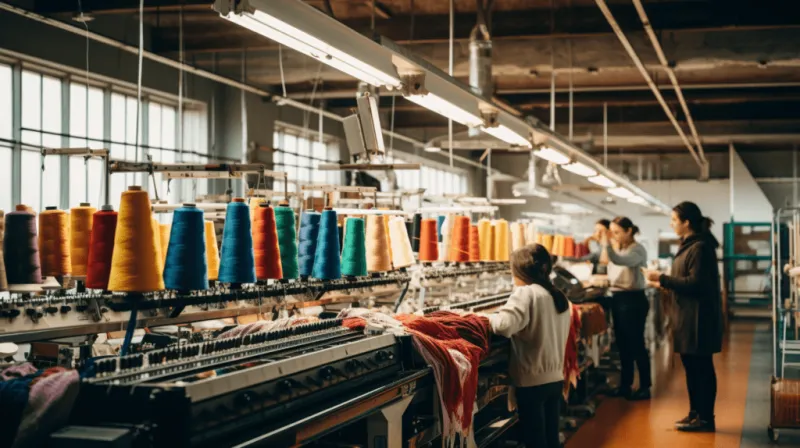
Photo: ethical fashion factory workers garment production behind the scenes, via total10fashion.com
We want to tell you something that most fashion brands — including ethical ones — would rather not say out loud: there is no such thing as perfectly sustainable clothing. Not yet. Possibly not ever, given the current state of global supply chains, material science, and consumer culture. And any brand that tells you otherwise is selling you a story more than a solution.
This isn't a reason to give up on conscious consumption. It's a reason to get smarter about it.
At Folded & Co., we believe the most respectful thing we can do for our customers is tell the truth — including the parts that are complicated, uncomfortable, and still unresolved. So let's actually talk about what's happening behind the seams of the sustainable fashion industry.
The Greenwashing Spectrum Is Wider Than You Think
Greenwashing isn't just a problem for fast fashion giants slapping "eco-conscious" labels on polyester. It exists on a spectrum, and a surprising amount of it lives inside the sustainable fashion space itself.
On one end, you have outright deception — brands using recycled imagery and nature-adjacent language to market products with no meaningful environmental differentiation. The FTC has taken action against several companies for exactly this, and the European Union's incoming Green Claims Directive is specifically designed to crack down on vague, unverifiable sustainability language.
But further along the spectrum, things get grayer. A brand might genuinely use organic cotton — which is a real improvement over conventionally grown cotton in terms of pesticide use — while failing to mention that organic cotton still requires enormous amounts of water, or that their dyeing processes use chemicals that end up in waterways in their production countries. Both things can be true simultaneously: a meaningful step forward, and still far from the full picture.
Then there's what researchers call "partial transparency" — brands that are genuinely trying, sharing some supply chain information, and doing real work on certain issues, while remaining opaque about others. This is probably where the majority of "ethical" brands actually live. And it's worth understanding why.
Why Even Good-Faith Brands Have Contradictions
Building a truly transparent, truly sustainable supply chain from scratch in the United States or Europe is, bluntly, extraordinarily difficult and expensive. Most ethical brands are small businesses navigating a global system that was not built with their values in mind.
Consider a brand that sources GOTS-certified organic cotton from India, has it woven in Portugal, dyed using low-impact processes in Italy, and assembled in a fair-trade certified factory in Los Angeles. That sounds like a win — and in many ways it is. But that garment has crossed three oceans and multiple continents before it lands in your hands. The carbon footprint of that logistics chain is real and significant, and it rarely shows up in the brand's marketing.
Or consider the recycled materials question. Fabrics made from recycled plastic bottles — rPET — have become a popular sustainable alternative, and they do divert waste from landfills. But they also shed microplastics with every wash, potentially more than virgin synthetic fabrics, according to research from the University of California Santa Barbara. The solution to one problem created a different one. This is how environmental trade-offs actually work, and it's messier than any "made from recycled materials" hang tag can convey.
What Certifications Actually Tell You (And What They Don't)
Third-party certifications are genuinely useful tools, but they're often misunderstood as guarantees rather than what they actually are: audited snapshots of specific practices at specific points in time.
Fair Trade Certified verifies that workers received fair wages and worked in safe conditions — but it typically covers the final stage of production, not the full supply chain. The farmer who grew the cotton may not be part of that certification.
GOTS (Global Organic Textile Standard) is one of the most rigorous textile certifications available, covering organic fiber content and restricted chemical use across the supply chain. It's meaningful. It's also expensive to obtain, which means many small ethical producers who are doing genuinely good work simply can't afford it.
B Corp Certification measures a company's overall social and environmental performance, governance, and accountability. It's a strong signal of values alignment — but it's a business certification, not a product-level guarantee.
None of this means certifications are worthless. It means they're one data point, not the whole story. A brand with no certifications might be doing more honest work than a brand with three logos on its homepage, if the former is transparent about its limitations and the latter is using certifications as a marketing shield.
What to Actually Look For Beyond the Marketing
So if certifications aren't the whole answer and marketing language can't be trusted at face value, what should conscious consumers actually do? A few practical frameworks:
Ask about the things brands don't volunteer. A brand that only tells you what it's doing right is a brand worth questioning. Look for companies that acknowledge their current limitations and describe what they're actively working to change. That kind of honesty is a stronger signal of integrity than a perfectly curated impact page.
Follow the supply chain as far as it goes. Can the brand tell you where its fabric is woven, not just where the garment is assembled? Do they know the names of the factories they work with? Can they tell you how workers are paid? The further down the chain a brand can speak to, the more seriously they're taking transparency.
Consider longevity as a sustainability metric. A piece that lasts ten years and gets worn 200 times is more sustainable than a "conscious collection" item that falls apart in eighteen months. Durability is an environmental value, and it's one of the most honest signals a brand can offer.
Buy less, regardless of the label. This is the part the industry doesn't love to say: the most sustainable purchase is often the one you don't make. Even ethical production has environmental costs. A closet built on intentionality — fewer pieces, chosen carefully, worn repeatedly — outperforms a closet full of "sustainable" impulse buys every single time.
Why We're Telling You This
We could have written a different version of this article — one that positioned Folded & Co. as the solution to all of these problems, handed you a clean narrative, and let you feel good about clicking "add to cart." A lot of brands do exactly that.
We don't think that serves you, and honestly, we don't think it serves the industry either. The sustainable fashion movement needs consumers who are genuinely informed, not just emotionally reassured. It needs brands willing to be held accountable to real standards, not marketing language. And it needs honest conversations about the gap between where we are and where we need to be.
We're working on our own version of that gap every day — on our sourcing, our materials, our logistics, and our transparency. We don't have it all figured out. But we're committed to telling you the truth about what we do know, and being honest about what we're still learning.
Because conscious consumption isn't a destination. It's a practice. And it starts with asking better questions.