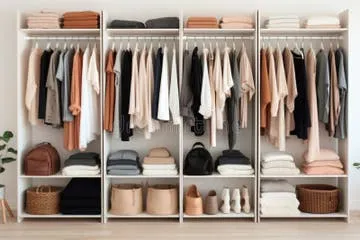
Dress Like Yourself, Every Single Day: The Case for Wearing the Same Thing on Purpose
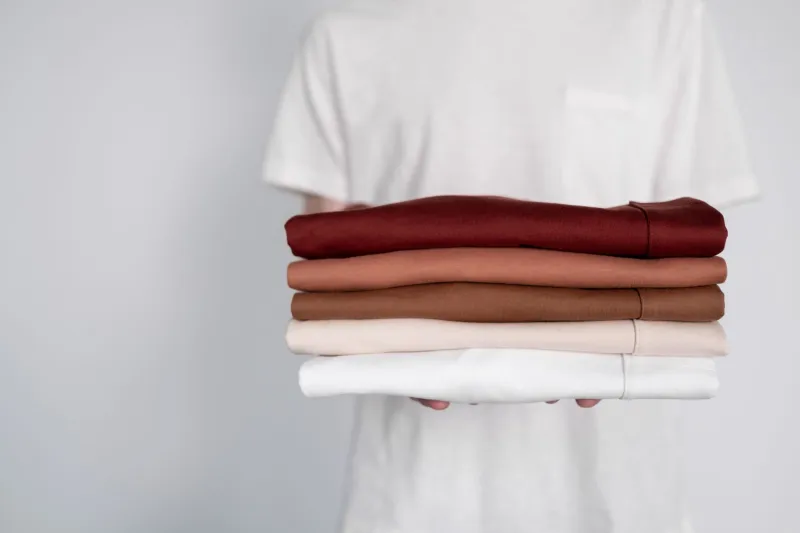
Let's get one thing straight: wearing essentially the same outfit every day is not laziness. It's not giving up. And it is definitely not boring — at least not in the way people mean when they say that like it's an insult.
What it actually is? A decision. A deliberate, kind-of-radical one. And once you make it, a lot of other things get surprisingly easier.
Your Brain Is Already Exhausted Before 9 AM
Decision fatigue is real, and it's not picky about where it shows up. Research from behavioral psychology has consistently shown that the more choices we make throughout a day, the worse our decision-making quality gets as the day goes on. Every micro-choice — oatmeal or eggs, reply now or later, this top or that one — draws from the same cognitive pool.
Your closet, if it's anything like the average American's, is making a quiet demand on that pool every single morning. One study estimated that women spend an average of 17 minutes deciding what to wear each day. That's nearly two hours a week. Over a year, we're talking more than four full days spent staring into an abyss of options that, if we're honest, mostly stress us out more than they excite us.
A personal uniform — a consistent aesthetic or set of go-to pieces you rotate with intention — essentially removes that drain. The decision's already made. You show up to your day with more mental bandwidth for things that actually require your full attention.
It's Not About Wearing the Exact Same Shirt
When people hear "personal uniform," they sometimes picture Steve Jobs and his black turtleneck, or Mark Zuckerberg and his grey t-shirts. And sure, that's one interpretation. But a personal uniform doesn't have to mean literal repetition. It means having a defined aesthetic lane — a consistent set of silhouettes, colors, and textures that feel unmistakably you.
Maybe your uniform is straight-leg dark denim, a tucked-in linen top, and white sneakers. Maybe it's a relaxed blazer over a bodysuit with loafers. Maybe it's earth tones, always, with a single interesting accessory. The specific formula matters less than the fact that you chose it — deliberately, with your actual life in mind.
Fashion psychologist Dr. Dawnn Karen, who coined the term "mood illustration dressing," has written extensively about how our clothing choices affect our psychological state and sense of self. When your external presentation aligns with your internal identity, there's a coherence that registers — not just to others, but to you. You stop performing "getting dressed" and start just... being dressed.
The Identity Piece Nobody Talks About
Here's the thing about endlessly chasing trends: it keeps you in a permanent state of becoming. You're always one purchase away from the version of yourself you're trying to project. The next season's palette, the silhouette everyone's wearing, the shoe that's suddenly everywhere — it's a moving target, and you're always slightly behind it.
A personal uniform inverts that dynamic. Instead of asking "what's the look right now," you ask "what actually reflects who I am." That's a fundamentally different question, and it leads somewhere more stable.
Several minimalists in the Folded & Co. community have described the shift in almost identical terms: there's a moment when you stop dressing for some imagined future self or some projected audience, and you start dressing for the actual, present you. That moment tends to feel less like restriction and more like relief.
"I used to spend so much energy trying to look like someone worth taking seriously," one reader told us. "When I finally figured out my uniform — dark trousers, a good knit, clean shoes — I stopped thinking about my clothes entirely. Which sounds like a loss, but it wasn't. It freed up so much space."
How to Actually Build Yours
This isn't about copying anyone else's formula. It's about excavating your own. Here's a straightforward way to start:
Step 1: Look at what you actually reach for. Not what you bought hoping you'd wear it. Not what you kept because it was expensive. What do you actually put on? Those pieces are data. They're telling you something about your real preferences versus your aspirational ones.
Step 2: Find the pattern. Is it always a certain silhouette — relaxed, tailored, oversized? A color family — neutrals, earth tones, monochromes? A texture — soft, structured, natural fabrics? Most people have a consistent pull they've never consciously named. Name it.
Step 3: Define your non-negotiables. What does every outfit you actually feel good in have in common? Maybe it's always comfortable enough to move freely. Maybe it never involves anything that needs dry cleaning. Maybe it works from morning into evening without a full change. These aren't limitations — they're the design specs for your uniform.
Step 4: Edit toward it, not away from everything. You don't have to purge your entire closet overnight. Start by identifying the pieces that fit the pattern and wearing those more. Over time, the gap between what you have and what you actually wear becomes obvious — and easier to close.
Step 5: Give it a few weeks before you judge it. The first time you show up to something in "the same thing" you wore last week, your brain might flag it as a problem. It's not. That discomfort is just novelty wearing off. What replaces it, usually, is something that feels a lot like confidence.
Less Isn't Giving Up — It's Getting Specific
There's a cultural story we've all absorbed that says more options equal more freedom, and more freedom equals more self-expression. But that equation doesn't always hold. Sometimes more options just mean more noise, more second-guessing, more spending on things that don't actually fit the life you're living.
A personal uniform is, at its core, a commitment to specificity. It says: I know enough about myself to make a choice and stand behind it. That's not a small thing.
At Folded & Co., we're pretty convinced that the most interesting wardrobes aren't the biggest ones. They're the most considered. And there's something genuinely compelling about a person who walks into a room dressed exactly like themselves — not performing a trend, not hedging their bets, just fully, quietly present in what they chose.
That's the uniform effect. And once you feel it, it's hard to go back.